


Teresa Margherita del Sacro Cuore di Gesù
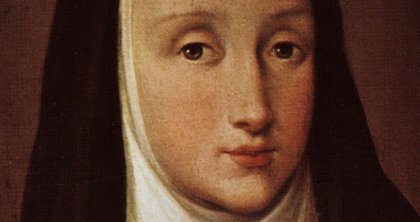
Anna Maria was born in Arezzo into the noble Redi family on 15th of July 1747.
Formed in a profound spirit of piety, at the age of six she could already be said to be a little contemplative, who asked anyone who was able to answer her: «Tell me, who is this God?».
Her inclination to recollection and prayer was accentuated during her years at the boarding school, spent in the Benedictine monastery of S. Apollonia in Florence, where she received a discreet liturgical instruction, while her spiritual life deepened in Eucharistic and Marian piety and devotion to the Sacred Heart. Returning to the family, she revealed her vocation to Carmel, a vocation of which she had been certain in the last months of boarding school and on September 1st, 1764 she entered the monastery of «St Teresa» in Florence, where she put on the Carmelite habit on March 11, 1765, with the name of Teresa Margaret of the Sacred Heart of Jesus.
At the age of twenty-two, peritonitis cut short her life on March 7, 1770.
The beatification ceremony was held on June 9, 1929. The solemn ceremony of canonization on March 13, 1934.
Documentation [Teresa Margherita del Sacro Cuore di Gesù]
PLEASE NOTE
1) In order to be able to consult the Positio please fill in the request form on this page.
2) If your request is accepted, we will then send you the conditions and directions for consulting the document.
Links - Teresa Margherita del Sacro Cuore di Gesù

Procedure - Teresa Margherita del Sacro Cuore di Gesù
1. The canonical norms concerning the procedure to be followed in the Causes of Saints are stated in the Apostolic Constitution Divinus Perfectionis Magister promulgated by John Paul II on 25 January 1983 (AAS LXXV, 1983, 349-355).
2. To initiate a Cause it is necessary that at least five years pass after the death of the candidate. This is to allow for greater balance and objectivity in the evaluation of the case and to allow the emotions of the moment to decant. There must be a clear conviction among people about his/her sanctity (fama sanctitas) and about the efficacy of his/her intercession with the Lord (fama signorum).
Teresa di Gesù (de los Andes)
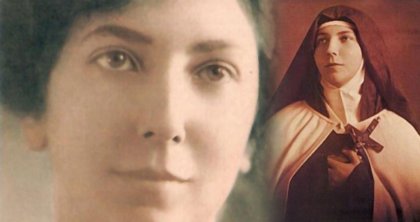
She was born in Santiago de Chile on July 13, 1900.
At the baptismal font she was called Juana Enriqueta Josefina of the Sacred Hearts Fernandez Solar. In the family she was called, and still is today by the name of Juanita. She lived a normal childhood within her family: her parents, Michele Fernández and Lucia Solar; three brothers and two sisters; maternal grandfather, uncles, aunts and cousins. The family enjoyed a good economic position and authentically preserved the Christian faith, living it with sincerity and perseverance.
Juana received her education in the college of the Sisters of the Sacred Heart. Her brief but intense history developed around college and family life. At the age of 14, inspired by God, she decided to consecrate herself to Him as a religious, and precisely, as a Discalced Carmelite.
Her wish came true on May 7, 1919, when she entered the small monastery of the Holy Spirit, in Los Andes, about 90 km away from Santiago. On October 14 of the same year she took the habit of a Carmelite, beginning her novitiate with the name of Teresa of Jesus. She had known for a long time that she would die young: the Lord had revealed it to her. She herself told her confessor a month before she died.
She welcomed this reality with joy, serenity and confidence, certain that in eternity she would continue her mission: to make God known and loved.
After much interior suffering and unspeakable physical pain, caused by a violent attack of typhus that ended her life, she passed from this world to the Father, on the evening of April 12, 1920. She had received the sacraments with great fervour and on April 7th, she made her religious profession "in articulo mortis". She still had 3 months to go to turn 20 years and 6 months, finishing her canonical novitiate and being able to make her religious profession. She died as a Discalced Carmelite novice.
The beatification ceremony was held on April 3, 1987. The solemn ceremony of canonization on March 21, 1993.
Documentation [Teresa di Gesù (de los Andes)]
PLEASE NOTE
1) In order to be able to consult the Positio please fill in the request form on this page.
2) If your request is accepted, we will then send you the conditions and directions for consulting the document.
[No form id or name provided!]
Links - Teresa di Gesù (de los Andes)
Procedure - Teresa di Gesù (de los Andes)
1. The canonical norms concerning the procedure to be followed in the Causes of Saints are stated in the Apostolic Constitution Divinus Perfectionis Magister promulgated by John Paul II on 25 January 1983 (AAS LXXV, 1983, 349-355).
2. To initiate a Cause it is necessary that at least five years pass after the death of the candidate. This is to allow for greater balance and objectivity in the evaluation of the case and to allow the emotions of the moment to decant. There must be a clear conviction among people about his/her sanctity (fama sanctitas) and about the efficacy of his/her intercession with the Lord (fama signorum).
Teresa di Gesù
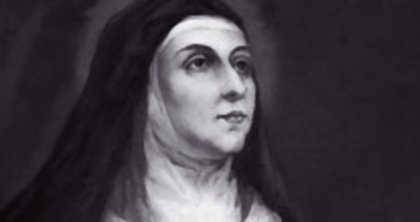
Teresa de Ahumada was born in Ávila on March 28, 1515. After the death of his wife and with two children, Alonso de Cepeda, her father, married Beatriz de Ahumada. Teresa was the third of the couple’s ten children. She grew up in a very religious environment, in which she developed a remarkable sensitivity for the transcendent from a very early age. She lost her mother at thirteen years of age. This blow and the crises typical of adolescence aggravated an affective problem that would pull her painfully toward her definitive conversion. Physically graced and with great social skills, she soon triumphed in “the vanity of the world.” After a fierce interior battle, she made the decision to be a religious while in Our Lady of Grace boarding school.
When her father tried to stop her entrance into the Carmel of the Incarnation, Teresa ran away, but with much sorrow. She was 20 years old and wanted to be free to conquer her own destiny. She lived in The Incarnation for 27 years. She made her profession in 1537 and, scarcely a year later, was overcome by a strange sickness. Its severity alarmed her family, who put her under the care of a famous healer. The treatment worsened her condition until she was given up for dead. During the course of her sickness, she came into contact with Franciscan mysticism by reading Osuna’s Third Spiritual Alphabet: it introduced her to the prayer of recollection. Once again in the monastery, her interior summons to solitude and prayer was impeded for years.
In 1554, before an image of Jesus “so wounded,” her conversion began. From this moment, she would no longer be moved by fear, but by a profound love of Him who had loved her first. Teresa of Jesus experienced the way in which the mercy of God transformed her life. Nonetheless, she did not hide herself in an egocentric, sterile intimism. The fruit of her conversion was prolific activity as foundress and writer that lasted until her death. Teresa dreamt of a small community that lived the Gospel authentically, a place of prayer and work, silence and fraternity. In 1562, amidst many difficulties, that dream became a reality with the first Discalced foundation: the convent of Saint Joseph in Ávila.
Teresa’s days flowed by joyfully until the witness of a missionary returning from the recently discovered Americas shook her heart. In view of the affliction of so many creatures, mistreated because of colonial ambition and the failings of those who evangelized, she felt the compelling need to broaden her work. She was 52 years old. From then on, her life was so intensely involved in travel and new convents that the image remaining of her in history is of “the gadabout saint.” Foundress of nuns and friars, she journeyed over more than six thousand kilometers along 16th century Spanish roads that were in terrible condition, and established 16 monasteries of Nuns at a prodigious pace (1567-1582). Teresa used up her health and life in service of God and the Church. She was convinced of the important ecclesial mission that was carried out in her houses of prayer. She understood that prayer, beginning from the transformation of the person herself, reached all corners of the earth like an expansive wave.
Saint Teresa of Jesus died on October 4, 1582, in Alba de Tormes. She was beatified by Paul V in 1614, canonized by Gregory XV in 1622, and proclaimed doctor of the Church by Paul VI in 1970. She was the first woman upon whom that title was conferred.
Video per la festa della nascita di Santa Teresa
Video per la festa della nascita di Santa Teresa
Video per la festa della nascita di Santa Teresa
Video per la festa della nascita di Santa Teresa
Documentation [Teresa di Gesù]
PLEASE NOTE
1) In order to be able to consult the Positio please fill in the request form on this page.
2) If your request is accepted, we will then send you the conditions and directions for consulting the document.
[No form id or name provided!]
Last News

Servant of God Maria Angelica of the Eucharist
June 25, 2026

Venerable Jean-Thierry of the Child Jesus and the …
June 17, 2026

Venerable Maria Eletta di Gesù
June 17, 2026

Venerable Maria Teresa of the Most Holy Trinity (Y…
June 17, 2026

Blessed Anna of Saint Bartholomew
June 10, 2026

Martyrs of Santander
May 27, 2026