


Links - Maria di Gesù Crocifisso
Procedure - Maria di Gesù Crocifisso
1. The canonical norms concerning the procedure to be followed in the Causes of Saints are stated in the Apostolic Constitution Divinus Perfectionis Magister promulgated by John Paul II on 25 January 1983 (AAS LXXV, 1983, 349-355).
2. To initiate a Cause it is necessary that at least five years pass after the death of the candidate. This is to allow for greater balance and objectivity in the evaluation of the case and to allow the emotions of the moment to decant. There must be a clear conviction among people about his/her sanctity (fama sanctitas) and about the efficacy of his/her intercession with the Lord (fama signorum).
Luigi e Maria Azelia Martin
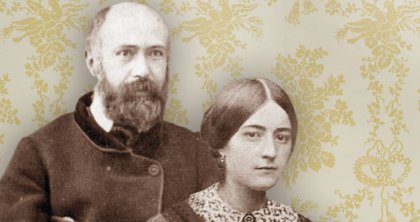
Louis Martin was born in Bourdeaux on August 22, 1823. A man of faith and prayer, he cultivated for a period of time the desire to consecrate himself to God in the hospice of Great St. Bernard but, discouraged by the study of Latin, he turned towards the profession of watchmaker and settled in Alençon.
Zélie Guerin was born in Gandelain, near Saint-Denis-sur-Sarthon, on December 23, 1831. She received an education that made her a skilled «point d’Alençon» lace maker. She too desired to enter religious life, but her precarious health and the negative judgment of the Superior of the Daughters of Charity in Alençon dissuaded her.
Zélie providentially met Louis on the Saint Leonard bridge: she passed a young man whose noble bearing, reserved gait, attitude full of dignity, impressed her. At the same time, an inner voice secretly murmured to her, «This is the man I have prepared for you.» They were united in marriage a few months later in the Notre-Dame Church of Alençon, on the night of July 13, 1858. They had the joy of giving birth to nine children; they lost four at an early age, but neither their mourning nor trials weakened their deep faith, sustained by daily attendance at the Eucharist and filial devotion to the Virgin Mary. Their last daughter was to become Saint Therese of the Child Jesus and the Holy Face, Doctor of the Church; of another daughter, Leonie (Sr. Francoise Therese, a Visitandine nun), her Cause of Beatification was opened on July 2nd 2015.
Louis and Zélie Martin are a sublime example of conjugal love, of a hardworking Christian family, attentive to others, generous towards the poor and animated by an exemplary missionary spirit, ready to collaborate in parish activities.
Zélie died in Alençon on 28th of August 1877 after a long illness. Louis then moved to Lisieux to ensure a better future for his five daughters. He who was called the Patriarch, after having offered all his daughters to God, experienced the humiliation of a disabling illness, which he lived through with dignity. He died near Evreux on 29th of July 1894.
The beatification ceremony was held on October 19, 2008. The solemn canonization ceremony on October 18, 2015.
Procedure - Luigi e Maria Azelia Martin
1. The canonical norms concerning the procedure to be followed in the Causes of Saints are stated in the Apostolic Constitution Divinus Perfectionis Magister promulgated by John Paul II on 25 January 1983 (AAS LXXV, 1983, 349-355).
2. To initiate a Cause it is necessary that at least five years pass after the death of the candidate. This is to allow for greater balance and objectivity in the evaluation of the case and to allow the emotions of the moment to decant. There must be a clear conviction among people about his/her sanctity (fama sanctitas) and about the efficacy of his/her intercession with the Lord (fama signorum).
Documentation [Luigi e Maria Azelia Martin]
PLEASE NOTE
1) In order to be able to consult the Positio please fill in the request form on this page.
2) If your request is accepted, we will then send you the conditions and directions for consulting the document.
Links - Luigi e Maria Azelia Martin

Giovanni della Croce
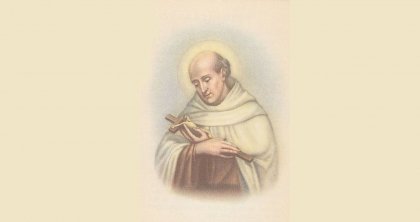
John was born in in 1542 in Fontiveros near Avila, a village in Old Spanish Castile. His father Gonzalo de Yepes was thrown out of his home and disinherited for marrying a poor silk weaver, Catalina Álvarez. Orphaned of his father at a very early age, he found himself having to move from city to city with his hardworking and active mother who was searching for their financial sustenance, thus he had to study and work in different places.
In the period between 1551 and 1559 he had cultural and artisan training in the «College of Doctrines» of Medina del Campo (today in the province of Valladolid), where he had moved with his mother. Later he was a carpenter, tailor, painter and carver; then an acolyte of the Church of Mary Magdalene, a clerk and assistant nurse in the Hospital of the Conception.
In 1563 he entered the Carmelite Order. Between 1564 and 1568 he completed his theological and philosophical studies at the University of Salamanca. In 1567 he was ordained a priest.
In October 1567, he met Teresa of Avila who was implementing a reform of Carmel. On August 9, 1568, after many talks with Teresa of Avila, he left for Valladolid where Teresa was to found a monastery of Discalced Carmelites. Here he remained until October, inquiring about and observing in detail the new reformed life. At the beginning of October, he went to Duruelo (Segovia), where he adapted a farmhouse as the first monastery of Discalced Carmelite friars. On 28 November, the first Sunday of Advent, he inaugurated the Reformed life there; on that occasion, he took the name of John of the Cross.
Between 1572 and 1577, he worked as a confessor and spiritual guide to the Monastery of the Incarnation of Ávila. On December 2nd 1577, he is arrested and imprisoned in the prison of the convent of the Carmelites of the Ancient Observance in Toledo. He remained captive for more than eight months, subjected to physical, psychological and spiritual ill-treatment, yet finding the inspiration to compose some of his most famous mystical poems. He finally managed to escape, on August 17, 1578.
In 1591, he was discharged from his leadership duties in the Order and being ill, on September 28 he went to Úbeda (Jaén), where he spent the last months of his life. Here he died, between Friday 13th and Saturday 14th of December 1591, at the age of 49. Since 1593, his incorrupt remains rest in Segovia.
The beatification ceremony was held in 1675. The solemn ceremony of canonization on December 27, 1726. In 1926, he was conferred the title of «Doctor of the Church».
Documentation [Giovanni della Croce]
PLEASE NOTE
1) In order to be able to consult the Positio please fill in the request form on this page.
2) If your request is accepted, we will then send you the conditions and directions for consulting the document.
[No form id or name provided!]
Links - Giovanni della Croce
Procedure - Giovanni della Croce
1. The canonical norms concerning the procedure to be followed in the Causes of Saints are stated in the Apostolic Constitution Divinus Perfectionis Magister promulgated by John Paul II on 25 January 1983 (AAS LXXV, 1983, 349-355).
2. To initiate a Cause it is necessary that at least five years pass after the death of the candidate. This is to allow for greater balance and objectivity in the evaluation of the case and to allow the emotions of the moment to decant. There must be a clear conviction among people about his/her sanctity (fama sanctitas) and about the efficacy of his/her intercession with the Lord (fama signorum).
Last News

Servant of God Maria Angelica of the Eucharist
June 25, 2026

Venerable Jean-Thierry of the Child Jesus and the …
June 17, 2026

Venerable Maria Eletta di Gesù
June 17, 2026

Venerable Maria Teresa of the Most Holy Trinity (Y…
June 17, 2026

Blessed Anna of Saint Bartholomew
June 10, 2026

Martyrs of Santander
May 27, 2026