


Margherita del SS. Sacramento
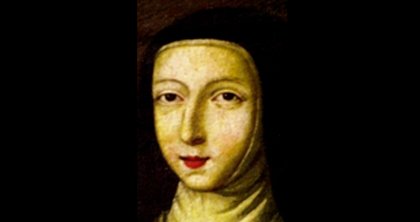
Margaret of the Blessed Sacrament was born in Beaune, France, on February 7, 1619.
Her parents, Pierre Parigot and Jeanne Battaille, were both middle-class influential and wealthy. They very quickly directed their child to an authentically Christian life. At the age of 12, Margaret lost both her parents and her uncle a priest, who had donated the ancient cloister to the Carmelites, could not do better than to deliver his niece to the custody of the nuns, entrusting them with the education of the pious girl.
Thus, on September 24, with special permission from the Superiors, she entered Carmel, receiving her First Communion on the same day from the hands of her uncle. According to the custom of the Order, a new name was given to her, which recalled the special grace that was granted that day to the fortunate child: "of the Blessed Sacrament".
From the time of her novitiate, she understood with surprising clarity that God had entrusted her with a particular mission. She was called to make known to the world the treasures of the Divine Childhood and the painful sufferings of the Saviour.
At the Beaune Carmel, Margaret found not only a deep understanding of her devotion and love for the Child Jesus, but also a very fertile soil in which the divine grain of wheat could take root and develop luxuriantly.
In the early years of her religious life, she had to suffer unspeakably under the often harsh and fierce assaults of the perverse enemy. Sometimes it seemed that the poor child had to struggle with "the principalities and the powers, against the rulers of this world of darkness, against the spirits of evil scattered in the air". But everything served only to purify her love, making sure that she took refuge only at the feet of the Little Jesus.
Every morning and every evening, Margaret spent a long time in prayer before the Little Jesus. When she fell seriously ill and felt her last hour was approaching, she insistently asked to be granted the joy of seeing her dear King of Grace carried close to the infirmary, to be able to look at him and make her ultimate sacrifice under his gaze.
She died in 1648, at the age of 20.
The decree on her heroic virtue was promulgated on December 10, 1905.
Documentation [Margherita del ss. Sacramento]
PLEASE NOTE
1) In order to be able to consult the Positio please fill in the request form on this page.
2) If your request is accepted, we will then send you the conditions and directions for consulting the document.
Links - Margherita del ss. Sacramento

Procedure - Margherita del ss. Sacramento
1. The canonical norms concerning the procedure to be followed in the Causes of Saints are stated in the Apostolic Constitution Divinus Perfectionis Magister promulgated by John Paul II on 25 January 1983 (AAS LXXV, 1983, 349-355).
2. To initiate a Cause it is necessary that at least five years pass after the death of the candidate. This is to allow for greater balance and objectivity in the evaluation of the case and to allow the emotions of the moment to decant. There must be a clear conviction among people about his/her sanctity (fama sanctitas) and about the efficacy of his/her intercession with the Lord (fama signorum).
Marcello della Vergine del Carmelo
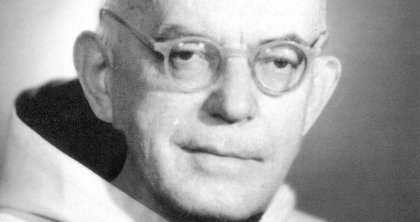
Marcellus of the Virgin of Carmel was born in Kiskomárom (now Zalakomár), Hungary, on September 9, 1887.
At the age of 38 he left everything to enter Carmel definitively. After his ordination he was appointed master of novices and in this role he expressed himself wonderfully as a father, mother, brother, spiritual director, and teacher towards his students.
He became famous in Hungary both as a preacher and as a confessor, becoming spiritual director of various ecclesiastical authorities. In 1950, his Father Provincial gave him a month's vacation to write the history of his life, answering mainly the basic question of what influence the Virgin Mary had upon his soul. Thus he could better rediscover himself by turning his gaze back to his youth.
The suppression of religious orders in 1950 forced him to leave the monastery, but his hope was unshakable and, from some testimonies collected, it could be seen that he showed a security and certainty completely incomprehensible to most religious. He even made a vow of love, now convinced that nothing could separate him from the love of God.
Father Marcellus had to adapt to living in a family, sharing the room, and having to practice an even narrower poverty than that of the monastery. He could not preach nor celebrate Mass, (which he did however, secretly). He lost the gift of hearing, but even if sick he did not feel useless, indeed he tried to be more receptive to external news, without focusing on his evil. He absorbed the news that came from Rome. In particular, he wrote in his diary the papal speeches, the insights of the Council Fathers about the liturgical reform and the re-evaluation of the role of the laity within the Church.
He died on May 29, 1966 in Budapest, at the dawn of Pentecost Sunday, the feast of Divine Love and his confreres saw in this coincidence an unequivocal sign that the Most Holy Trinity had finally welcomed him into their embrace.
The decree on his heroic virtue was promulgated on December 9, 2013.
Documentation [Marcello della Vergine del Carmelo]
PLEASE NOTE
1) In order to be able to consult the Positio please fill in the request form on this page.
2) If your request is accepted, we will then send you the conditions and directions for consulting the document.
[No form id or name provided!]
Links - Marcello della Vergine del Carmelo
Procedure - Marcello della Vergine del Carmelo
1. The canonical norms concerning the procedure to be followed in the Causes of Saints are stated in the Apostolic Constitution Divinus Perfectionis Magister promulgated by John Paul II on 25 January 1983 (AAS LXXV, 1983, 349-355).
2. To initiate a Cause it is necessary that at least five years pass after the death of the candidate. This is to allow for greater balance and objectivity in the evaluation of the case and to allow the emotions of the moment to decant. There must be a clear conviction among people about his/her sanctity (fama sanctitas) and about the efficacy of his/her intercession with the Lord (fama signorum).
Maddalena di San Giuseppe
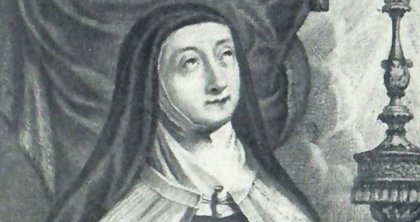
Magdalene of St Joseph was born in Paris, to a Turonese family, on May 17, 1578, the sixth of fifteen children. She grew up in Paris and Tours, where, in 1603, she met Pierre de Bérulle who wanted and was about to introduce the Teresian Carmel into France.
Overcome by the ideal proposed by the future cardinal, she decided to enter the Discalced Carmelites. In Paris, in July 1604, she joined the group that, under the leadership of Barbe Acarie (the future Bl. Mary of the Incarnation), was preparing to enter the Teresian Carmel.
On October 17, 1604, when the first Discalced Carmelites arrived from Spain, Magdalene with her companions entered the specially erected monastery of the Incarnation of Paris, where on November 12, 1605, she was the first professed. The following day, Bl Anna di St Bartholomew, companion and confidant of St. Teresa, appointed the young religious as teacher of the novices, a position that she held for two and a half years, shaping the first generation of French Discalced Carmelite nuns, who then had to spread the Teresian flame throughout the nation, always supported by the prayer, advice, and prudence of Magdalene.
On 20 April 1608, she was elected Prioress, immediately proving to be spiritually and apostolically mature in the government of her religious and in the irradiation of the Teresian ideal. Re-elected in 1611, she remained in the monastery until March 1615. In July of that year she was sent to Tours to help the prioress of that monastery (founded by Magdalene's father), who was poorly prepared for directing a monastery. After a brief stop in Paris (March-July 1616), on 8th of July 1616 she founded the monastery of Lyon and on 7th of September 1617 another monastery, "Mother of God", in Paris, bringing with her Catherine of Jesus (d. 1623), a distinguished mystic of whom she was the confidant, the guide and, after her death, the biographer, at the request of Queen Maria de' Medici.
In 1624 she was recalled to the monastery of the Incarnation in Paris and was re-elected prioress, remaining in this office until 1635.
She died in Paris, in the first monastery of the Incarnation, on April 30, 1637.
On July 16, 1789, the decree on her heroic virtue was promulgated.
Documentation [Maddalena di San Giuseppe]
PLEASE NOTE
1) In order to be able to consult the Positio please fill in the request form on this page.
2) If your request is accepted, we will then send you the conditions and directions for consulting the document.
[No form id or name provided!]
Last News

Servant of God Maria Angelica of the Eucharist
June 25, 2026

Venerable Jean-Thierry of the Child Jesus and the …
June 17, 2026

Venerable Maria Eletta di Gesù
June 17, 2026

Venerable Maria Teresa of the Most Holy Trinity (Y…
June 17, 2026

Blessed Anna of Saint Bartholomew
June 10, 2026

Martyrs of Santander
May 27, 2026