


Links - Alfonso Maria dello Spirito Santo (Mazurek)

Procedure - Alfonso Maria dello Spirito Santo (Mazurek)
1. The canonical norms concerning the procedure to be followed in the Causes of Saints are stated in the Apostolic Constitution Divinus Perfectionis Magister promulgated by John Paul II on 25 January 1983 (AAS LXXV, 1983, 349-355).
2. To initiate a Cause it is necessary that at least five years pass after the death of the candidate. This is to allow for greater balance and objectivity in the evaluation of the case and to allow the emotions of the moment to decant. There must be a clear conviction among people about his/her sanctity (fama sanctitas) and about the efficacy of his/her intercession with the Lord (fama signorum).
Teresa Margherita del Cuore di Maria
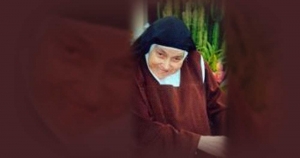
Maria Luisa Resende Marques was born in Brazil on December 24, 1915, in Borda da Mata, in the state of Minas Gerais. She felt she had a religious vocation but her father at first opposed it. She managed to convince him and entered the Carmel of Mogi das Cruzes on the 28th of May 1937, as a postulant. When she entered the novitiate, she received the habit and chose as her religious name Teresa Margherita of the Heart of Mary. She made her religious vows on the 2nd of February, 1942.
Sister Teresa Margherita was elected assistant-mistress of novices and, at the age of thirty, was elected sub-prioress of the convent. She also served as organist and turn sister.
In 1962 she was sent to found and direct a new convent, the Carmel of São José in Três Pontas (MG). Together with seven nuns, she arrived in Três Pontas to begin the new foundation on July 16, 1962, the feast of Our Lady of Mount Carmel. It was 400 years after St Teresa’s first foundation, the first Carmel of St. Joseph in Avila, Initially, the community lived in a small house and later, on January 22nd, 1969, the community moved to the definitive Monastery. On several occasions she was Prioress, Sub-Prioress, Mistress of Novices. She took care of the biblical, spiritual and liturgical formation of the sisters in her community.
She died on the 14th of November, 2005.
The diocesan inquiry into her "life, virtue and reputation for holiness" closed on May 12, 2013. On the 28th of March 2014, the decree of validity was granted.
Il decreto sulle virtù eroiche è stato promulgato il 20 maggio 2023.Procedure - Teresa Margherita del Cuore di Maria
1. The canonical norms concerning the procedure to be followed in the Causes of Saints are stated in the Apostolic Constitution Divinus Perfectionis Magister promulgated by John Paul II on 25 January 1983 (AAS LXXV, 1983, 349-355).
2. To initiate a Cause it is necessary that at least five years pass after the death of the candidate. This is to allow for greater balance and objectivity in the evaluation of the case and to allow the emotions of the moment to decant. There must be a clear conviction among people about his/her sanctity (fama sanctitas) and about the efficacy of his/her intercession with the Lord (fama signorum).
Documentation [Teresa Margherita del Cuore di Maria]
PLEASE NOTE
1) In order to be able to consult the Positio please fill in the request form on this page.
2) If your request is accepted, we will then send you the conditions and directions for consulting the document.
Links - Teresa Margherita del Cuore di Maria
Maria del Carmine della SS Trinità
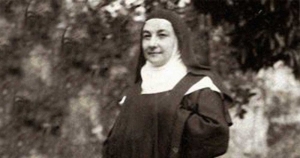
The Venerable Servant of God, Maria Carmen of the Most Holy Trinity (Civil name: Carmen Caterina Bueno) was born in Itu, in the State of São Paulo, Brazil, on November 25, 1898. Her parents were Teotônio Bueno and Maria do Carmo Bauer.
Shortly after Carmen was born, her mother, very young, had serious health problems. Little Carmen, therefore, had to move to Campinas, to be with her aunt, a widow who dedicated herself totally to Carmen’s education. The Servant of God spent her childhood in Campinas, and it was in this city that she also met Francisco Borja do Amaral, who was to become Bishop of Taubaté. In this period Carmen lived a little with her aunt and a little with her family.
In 1916, Carmen, along with her aunt, moved to Paquetá Island, Guanabara Bay. Later she entered Zion College in São Paulo and on September 23, 1917 she decided to dedicate her whole life to the Lord and to the Virgin Mary. From her youth she was distinguished by her great love for the Lord and the Church, at the same time she devoted much time to her studies; She spoke and wrote French perfectly, wrote small literary works and learned the art of painting.
The turning point of her spiritual life came after reading «A Story of a Soul» and it was then that she decided to become a Carmelite, like Saint Therese of Lisieux. On April 21, 1926, she decided to enter the Carmel of St. Joseph in Rio de Janeiro. She received the Habit on October 24, 1926 and chose to be called Sister Maria Carmen of the Most Holy Trinity as her religious name.
After her initial years in the Monastery, she exercised the office of Mistress of novices, sub-Prioress and finally Prioress Throughout this period she was known for her great humility. She was the first to undertake even the most menial tasks. She was the first to set an example of humility and patience to all nuns.
In 1949 she returned to being Mistress of Novices. It was the period in which her serious health problems began.
In 1952 she again was Prioress of the Carmel and it was at that time that the idea of founding a new monastery was born, the Carmel of the Sacred Face and Pius XII, which was established in the Diocese of Taubaté, where Monsignor Francisco Borja do Amaral was Bishop. It was August 24, 1953.
Six nuns left to accompany M. Maria Carmen, now Mother Carminha for everyone. Immediately the nuns were loved by the whole population, in particular the Servant of God was considered a saint by all. There were many people who asked to be directed spiritually by her.
On September 12, 1961, Mother Carminha gave up the leadership of the Monastery to Mother Antonietta Maria, as her health problems began to worsen seriously.
On July 13, 1966, the Servant of God had a holy death in the odour of sanctity.
The Diocesan Inquiry on the "life, virtue and reputation of holiness" was opened on February 7, 2010 and closed on November 10, 2012, at the diocese of Taubaté.
The decree on heroic virtues was promulgated on January 23, 2020.
Documentation [Maria del Carmine della SS Trinità]
PLEASE NOTE
1) In order to be able to consult the Positio please fill in the request form on this page.
2) If your request is accepted, we will then send you the conditions and directions for consulting the document.
[No form id or name provided!]
Links - Maria del Carmine della SS Trinità
Procedure - Maria del Carmine della Santissima Trinità
1. The canonical norms concerning the procedure to be followed in the Causes of Saints are stated in the Apostolic Constitution Divinus Perfectionis Magister promulgated by John Paul II on 25 January 1983 (AAS LXXV, 1983, 349-355).
2. To initiate a Cause it is necessary that at least five years pass after the death of the candidate. This is to allow for greater balance and objectivity in the evaluation of the case and to allow the emotions of the moment to decant. There must be a clear conviction among people about his/her sanctity (fama sanctitas) and about the efficacy of his/her intercession with the Lord (fama signorum).
Last News

Servant of God Maria Angelica of the Eucharist
June 25, 2026

Venerable Jean-Thierry of the Child Jesus and the …
June 17, 2026

Venerable Maria Eletta di Gesù
June 17, 2026

Venerable Maria Teresa of the Most Holy Trinity (Y…
June 17, 2026

Blessed Anna of Saint Bartholomew
June 10, 2026

Martyrs of Santander
May 27, 2026