


Procedure Giacomo di Gesù
1. The canonical norms concerning the procedure to be followed in the Causes of Saints are stated in the Apostolic Constitution Divinus Perfectionis Magister promulgated by John Paul II on 25 January 1983 (AAS LXXV, 1983, 349-355).
2. To initiate a Cause it is necessary that at least five years pass after the death of the candidate. This is to allow for greater balance and objectivity in the evaluation of the case and to allow the emotions of the moment to decant. There must be a clear conviction among people about his/her sanctity (fama sanctitas) and about the efficacy of his/her intercession with the Lord (fama signorum).
Documentation [Giacomo di Gesù]
![Documentation [Giacomo di Gesù]](/media/k2/items/cache/e13c4c6b684536ecde3ac77213ca4d80_Generic.jpg)
PLEASE NOTE
1) In order to be able to consult the Positio please fill in the request form on this page.
2) If your request is accepted, we will then send you the conditions and directions for consulting the document.
Giacomo di Gesù
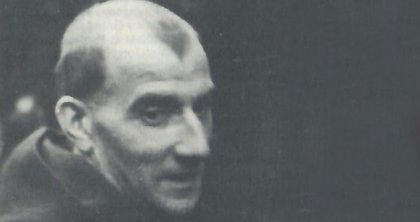
Lucien Louis Bunel, in religion Father Jacques of Jesus, was born in Barentin (France) on January 29, 1900 and died in Linz (Austria) on 2nd of June, 1945.
At a very early age, Lucien Bunel decided to become a priest. He entered the minor seminary of Rouen, where his industriousness was appreciated but not his character. He was ordained a priest on 1st of July, 1925. He wished to enter the Carmelite Order, but the Archbishop of Rouen would not give his consent. Only in 1931 was Lucien Bunel able to enter the novitiate of the monastery of the Lille Discalced Carmelites, where he took the name of Br Jacques of Jesus.
In 1934, at the request of his provincial, he founded and directed the Little College of St Therese of the Child Jesus in Avon, in a part of the Carmelite monastery. He was a teacher of classical studies and a supervisor: the pupils sometimes called him "The Saint".
During the Second World War, he quickly engaged in the Resistance, while continuing his activity at the Avon college. He offered school protection to those who wanted to avoid compulsory labour service in Nazi Germany. He allowed Lucien Weil, a natural science teacher, who had been forbidden to teach because he was Jewish, to give some lectures at the Little College. Father Jacques also welcomed three Jewish children, Hans-Helmut Michel, Jacques Halpern and Maurice Schlosser, under the false identities of Bonnet, Dupré and Sabatier. Although his arrest on January 15, 1944 was directly linked to the three Jewish children following a complaint, it was above all his involvement in the Resistance that led to his final deportation to Gusen in Austria.
Taking care of the sick and the infirmary, celebrating Mass in the camp and every day offering St. Therese to the prisoners, he constantly cared for others and particularly the weakest. While the SS and guards tried to destroy it, Father Jacques was "reconciling war with mankind." Eventually he fell ill, but still found the strength, after the liberation of the camp, to represent the French at the meetings of the International Committee of Deportees. He died of exhaustion in Linz on 2nd of June 1945. His body was transferred to the Carmelite cemetery in Avon.
He is honoured at Yad Vashem as one of the Righteous Among the Nations. On June 9, 1985 he was posthumously awarded the "Righteous Among the Nations" medal from the State of Israel.
Procedure Gerardo di Santo Stefano Re
1. The canonical norms concerning the procedure to be followed in the Causes of Saints are stated in the Apostolic Constitution Divinus Perfectionis Magister promulgated by John Paul II on 25 January 1983 (AAS LXXV, 1983, 349-355).
2. To initiate a Cause it is necessary that at least five years pass after the death of the candidate. This is to allow for greater balance and objectivity in the evaluation of the case and to allow the emotions of the moment to decant. There must be a clear conviction among people about his/her sanctity (fama sanctitas) and about the efficacy of his/her intercession with the Lord (fama signorum).
Links - Gerardo di Santo Stefano Re

Documentation [Gerardo di Santo Stefano Re]
![Documentation [Gerardo di Santo Stefano Re]](/media/k2/items/cache/d43bc3919908507e9e38413a7691e181_Generic.jpg)
PLEASE NOTE
1) In order to be able to consult the Positio please fill in the request form on this page.
2) If your request is accepted, we will then send you the conditions and directions for consulting the document.
[No form id or name provided!]
Gerardo di Santo Stefano Re
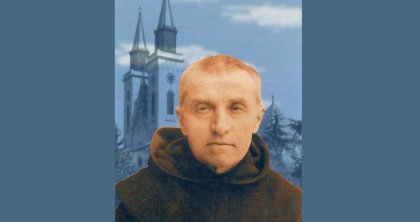
Gerard of St Stephen the King was born in the village of Đurđin in Bač to his parents Jose Stantić and Đula (Julije) Jagić. He was admitted to the Carmelites in Graz on 9th September 1896 and on 11 September 1897 made his religious vows. He studied theology and, after his studies, was ordained a priest in 1902.
He was the first Croatian, that is, the only one who could speak Croatian among the priests of the newly founded Carmelite monastery in Sombor (1904), which then belonged to the Carmelite Hungarian province.
In his work, Father Gerard Tomo Stantić was exemplary and zealous towards the members of all nations, both his Croatians, the Hungarians and Germans. As a priest, he proved exemplary in his work, in confession and in the care of the sick. He planned to bring the Carmelites to Croatia and Archbishop Alojzije Stepinac helped carry out his plan. Projects were interrupted by the Second World War, and the final realization of his project took place only after his death, in 1959, when the Carmelites arrived in Zagreb (Remete), where they founded a monastery in 1960, and later in Split and the island of Krk.
He died on June 24, 1956. His remains rest in the church of the Carmelite monastery of Sombor.
The diocesan inquiry on his "life, virtue and reputation for holiness" closed on September 21, 2003. On the 30th of November 2006 the decree of validity was granted.
Procedure Francesco di Gesù
1. The canonical norms concerning the procedure to be followed in the Causes of Saints are stated in the Apostolic Constitution Divinus Perfectionis Magister promulgated by John Paul II on 25 January 1983 (AAS LXXV, 1983, 349-355).
2. To initiate a Cause it is necessary that at least five years pass after the death of the candidate. This is to allow for greater balance and objectivity in the evaluation of the case and to allow the emotions of the moment to decant. There must be a clear conviction among people about his/her sanctity (fama sanctitas) and about the efficacy of his/her intercession with the Lord (fama signorum).
Links - Francesco di Gesù

Last News

Servant of God Maria Angelica of the Eucharist
June 25, 2026

Venerable Jean-Thierry of the Child Jesus and the …
June 17, 2026

Venerable Maria Eletta di Gesù
June 17, 2026

Venerable Maria Teresa of the Most Holy Trinity (Y…
June 17, 2026

Blessed Anna of Saint Bartholomew
June 10, 2026

Martyrs of Santander
May 27, 2026