


Documentation [Giovanni Antonio Guadagni (cardinale)]
PLEASE NOTE
1) In order to be able to consult the Positio please fill in the request form on this page.
2) If your request is accepted, we will then send you the conditions and directions for consulting the document.
Giovanni Antonio Guadagni (cardinale)
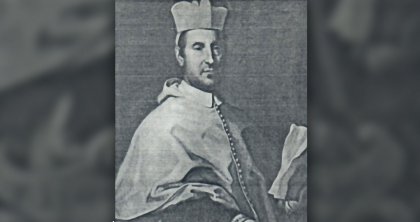
Giovanni Antonio was born in Florence on September 14, 1674, the only son of the Marquis Donato Guadagni and his wife Maddalena, née Corsini, sister of the future Pope Clement XII.
On the 3rd of May 1696, he graduated from the University of Pisa in both civil and canon law. He moved to Rome as a lawyer. Shortly afterwards he returned to Florence and following his religious vocation against the advice of his family, enterimg the Discalced Carmelites in Arezzo. On the first of November 1700, he made his solemn religious profession, taking the name of John Anthony of St. Bernard. He continued his studies in philosophy and theology in the monastery of the Order in Florence. In 1702 he received priestly ordination, was then appointed prior of the Florence monastery, then provincial for Etruria, where he founded a monastery in Pisa. In 1724, at the request of the Grand Duke of Tuscany, he was elected bishop of Arezzo. He received the consecration from the hands of his uncle, then cardinal in Rome, in the church of Santa Maria della Scala, on December 31st of that year.
On the 9th of March 1725, he made his solemn entry into Arezzo. In 1730 he celebrated a synod there, both to affirm some principles on the governance of the diocese and to make the clergy attentive to Jansenist errors..
In the conclave of 1730, his maternal uncle was elected Pope, taking the name of Clement XII. In his second consistory held on 24 September 1831, he created his nephew a cardinal. On October 14, he received the cardinal's hat in the cathedral of Arezzo with the presbyteral title of Saints Sylvester and Martin ai Monti. The following year he resigned from the office of bishop, to go to Rome where he was appointed Vicar for the diocese of Rome, a position he held until his death. In 1738 he became commendatory abbot of the abbey of Grottaferrata.
In 1750 he became cardinal bishop of Frascati. In 1756 he became sub-dean of the College of Cardinals and opted for the suburbicarian see of Porto and Santa Rufina.
He took part in both conclaves of his cardinalate, that of 1740 which at the death of his uncle saw the election of Benedict XIV; and that of 1758, with the election of Clement XIII.
He died in Rome on January 15th of the following year, in the odour of sanctity. The funeral was held in the Roman church of his Order, Santa Maria della Scala, where he was buried.
In 1763, the process for the cause of Beatification and Canonization was opened.
Procedure Gioacchino di Regina Pacis
1. The canonical norms concerning the procedure to be followed in the Causes of Saints are stated in the Apostolic Constitution Divinus Perfectionis Magister promulgated by John Paul II on 25 January 1983 (AAS LXXV, 1983, 349-355).
2. To initiate a Cause it is necessary that at least five years pass after the death of the candidate. This is to allow for greater balance and objectivity in the evaluation of the case and to allow the emotions of the moment to decant. There must be a clear conviction among people about his/her sanctity (fama sanctitas) and about the efficacy of his/her intercession with the Lord (fama signorum).
Links - Gioacchino di Regina Pacis

Documentation [Gioacchino di Regina Pacis]
PLEASE NOTE
1) In order to be able to consult the Positio please fill in the request form on this page.
2) If your request is accepted, we will then send you the conditions and directions for consulting the document.
[No form id or name provided!]
Gioacchino di Regina Pacis
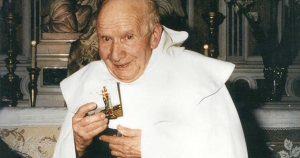
Joachim of the Queen of Peace was born in Sassello, Province of Savona, Italy, on February 12, 1890, to Giacomo Ramognino and Caterina Badano. He was baptized with the name of James Peter. The father preferred to call him Leo and as such was he registered in the Municipality, in honour of Pope Leo XIII.
After elementary school, his father quickly put him in a workshop to learn the trade of carpenter. At the age of 17 he was already working in the workshop as the owner. At the age of 25 he took part in the First World War, among the pontieri (bridge maintenance men) of the V Company. He initiated among the soldiers devotion to the Holy Child Jesus of Prague, already known by the Ligurians. In 1918, regardless of the danger from the Piave in flood, Corporal Nino (as he was called, from the ending of his surname and a reference to his devotion to the nino Jesus) with his good pontieri, set to work to give a ride to the troops of the XXII Army Corps who, on the night of October 26, passed over the bridge he had fortified, the only one left viable after the flood. The Child Jesus had passed through their minds, he was carried by "Nino" and his group of "ardent followers". Nino later received the honour of Knight of Vittorio Veneto.
In memory of the gift of peace, our Leo Ramognino, collaborating with the indefatigable Msgr. Pirotto (later bishop of Troy in Foggia) built the Monte Beigua sanctuary in honour of Mary Queen of Peace. A veteran from 1919 onwards, he gave himself body and soul to the building up of his parish. It can be said that he founded the St. Louis Catholic Youth Group. He lived intensely the life of an associate of the Confraternities to which he belonged and of the St. Alfonso Mary de' Liguori Catholic Workers' Society of Mutual Aid. He also cooperated in establishing the Catholic Explorers in Sassello.
The 1950 Holy Year became for Nino a great turning point, the year in which he entered Carmel in the Varazze desert monastery, at the age of 61. He was helped, in particular, by Father Anastasio Ballestrero, then Provincial, who immediately formed a deep friendship with him, based on esteem for his pure soul as a "child of God". In 1967, after ten years as a regular tertiary, from the direct interest of the then Superior General, Fr A. Ballestrero, Br Joachim (religious name he chose), was admitted to Solemn Profession, directly in the First Order, without the canonical year of Novitiate.
Having become a Discalced Carmelite religious, he was put in charge of the Sanctuary of Regina Pacis, in the meantime entrusted to the care of the Discalced Carmelites. He called himself good-naturedly "a poor old sack of flour". The people of Sassello (Acqui Terme), called him and still remember him as "Ninu u santu", that is, Nino the saint. His hope was a characteristic trait. It communicated a luminous certainty. God's love then expressed it in a special way through prayer. He identified himself with God, detached himself from everything, and returned to everyone with more love. It could be said that it was a continuous "thank you" to God and also a thank you to the brothers. Brother Joachim had a smile that we no longer have, and we can no longer have. In him the sky and the beauty and tenderness of the Virgin Mother Mary could be seen to shine through.
He died in the Desert of Varazze on August 25, 1985.
The diocesan inquiry into his "life, virtue and reputation for holiness" closed on January 6, 2015. On 13 May 2016 the decree of validity was granted.
Procedure - Domenico di Gesù Maria
1. The canonical norms concerning the procedure to be followed in the Causes of Saints are stated in the Apostolic Constitution Divinus Perfectionis Magister promulgated by John Paul II on 25 January 1983 (AAS LXXV, 1983, 349-355).
2. To initiate a Cause it is necessary that at least five years pass after the death of the candidate. This is to allow for greater balance and objectivity in the evaluation of the case and to allow the emotions of the moment to decant. There must be a clear conviction among people about his/her sanctity (fama sanctitas) and about the efficacy of his/her intercession with the Lord (fama signorum).
Links - Domenico di Gesù Maria
Documentation [Domenico di Gesù Maria]
![Documentation [Domenico di Gesù Maria]](/media/k2/items/cache/73d7edd1405081e5433c41d9ad2ee18c_Generic.jpg)
PLEASE NOTE
1) In order to be able to consult the Positio please fill in the request form on this page.
2) If your request is accepted, we will then send you the conditions and directions for consulting the document.
[No form id or name provided!]
Domenico di Gesù Maria
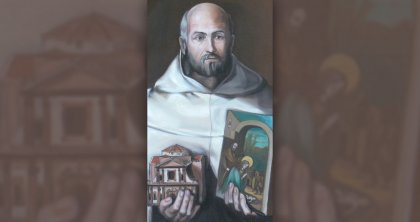
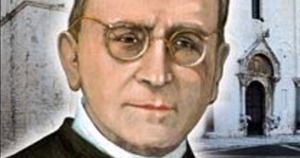
Dominic of Jesus Mary was born on May 16, 1559 in Calatayud (Spain), the son of Miguel de Ruzola, a notary, and Jerónima López.
He received the Carmelite habit in Zaragoza on 24th of May 1572 and was ordained a priest in 1584. The Carmelite province of Aragon had passed with substantially positive results through the pre-Tridentine phase of renewal promoted by the General, Nicholas Audet, as well as having reacted constructively to the various attempts at reform following the Council of Trent. During his stay in the city of Valencia (1581? - 1589), Domenic enriched his experience in contact with the fruits of the general reform of the Church that was developing in the Iberian Peninsula. His stay, in fact, coincided with a part of the long government of Bishop Juan de Ribera, known for his work of renewal carried out in the diocese of Valencia.
In 1589 he asked to be received among the Discalced Carmelites and, repeating his novitiate, he made his profession according to the «primitive» rule on November 22, 1590. After a stay in several monasteries in Spain, in 1604 he moved to Italy at the invitation of the Commissioner General, Fr. Peter of the Mother of God. For the rest of his life he remained incardinated into the Italian Congregation of the Discalced Carmelites.
A Superior and founder of various monasteries, he was several times a General Councillor, as well as Superior General in the three-year period 1617-1620.
Sent by the Pope to Germany, at the request of Maximilian of Bavaria, he played an important role in the defence of the Catholic faith and both the Emperor and the Pope recognized his decisive help in the battle of White Mountain, at the gates of Prague on November 8, 1620. He founded the monasteries of Vienna and Prague. He carried out missions in France and Flanders, accompanied by an ever-increasing reputation for holiness and working miracles.
He collaborated in the foundation of Propaganda Fide, occupying himself, at the request of the Roman Pontiff, in procuring the necessary financial subsidies.
During a new mission to the Emperor's court, he died in Vienna on 16th February, 1630.
The study of the Positio on his heroic virtue is currently underway at the Congregation for the Causes of Saints.
Last News

Servant of God Maria Angelica of the Eucharist
June 25, 2026

Venerable Jean-Thierry of the Child Jesus and the …
June 17, 2026

Venerable Maria Eletta di Gesù
June 17, 2026

Venerable Maria Teresa of the Most Holy Trinity (Y…
June 17, 2026

Blessed Anna of Saint Bartholomew
June 10, 2026

Martyrs of Santander
May 27, 2026