


Documentazione [Martiri di Segorbe-Castellon (Eleuterio di Maria SS.ma e 33 Compagni)]
ATTENZIONE
1) Per poter esaminare la Positio compilare l'apposito modulo di richiesta presente in questa pagina.
2) Se la richiesta verrà accettata, invieremo in seguito le condizioni e le istruzioni per consultare il documento.
Links - Cecilia Maria del Volto Santo

Documentation [Cecilia Maria del Volto Santo]
PLEASE NOTE
1) In order to be able to consult the Positio please fill in the request form on this page.
2) If your request is accepted, we will then send you the conditions and directions for consulting the document.
[No form id or name provided!]
Procedure Cecilia Maria del Volto Santo
1. The canonical norms concerning the procedure to be followed in the Causes of Saints are stated in the Apostolic Constitution Divinus Perfectionis Magister promulgated by John Paul II on 25 January 1983 (AAS LXXV, 1983, 349-355).
2. To initiate a Cause it is necessary that at least five years pass after the death of the candidate. This is to allow for greater balance and objectivity in the evaluation of the case and to allow the emotions of the moment to decant. There must be a clear conviction among people about his/her sanctity (fama sanctitas) and about the efficacy of his/her intercession with the Lord (fama signorum).
Iconografia - Cecilia Maria del Volto Santo

https://postocd.org/index.php/en/documentation-teresa-camilla-di-gesu-bambino/itemlist/user/42-superuser?start=70#sigProId1ff2503709
Cecilia Maria del Volto Santo
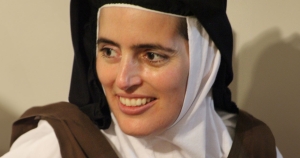
Cecilia Maria Sánchez Sorondo was born on 5 December 1973 in San Martín de Los Andes (Argentina), the second of ten siblings. She was noted for her great ability to relate to others and always showed concern for people: in particular, her compassion directed her towards the most forgotten. During her fifth year of high school, she perceived the call to Carmel, through her familiarity with St. Teresa of Jesus. After completing her studies at the School of Nursing, she entered the Discalced Carmelite Monastery of Santa Fe on 8 December 1997. In 2015 she was diagnosed with cancer, but she faced it with joy and serenity, considering it an opportunity to further consecrate herself to Christ. Despite heavy treatment in Buenos Aires, she maintained a spirit of gratitude and tenderness, living her illness with simplicity and dedicating her time to consoling and encouraging others. Cecilia Maria died on 23 June 2016 in a reputation of holiness, leaving a legacy of joy and hope, which was also shared on social media. Her life and illness are a heartwarming testimony of Christian faith and love.
On 23 February 2025, the diocesan inquest on the ‘life, virtues, fame of holiness and signs’ will be initiated at the monastery of the Discalced Carmelites of Santa Fe.
Maria Eletta di Gesù
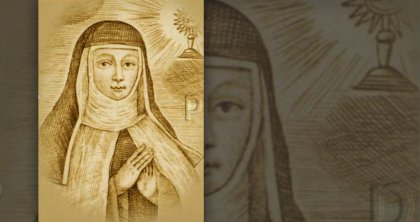
She was born in Terni, Italy, on the 28th of January 1605, the third daughter of the nobleman Alessandro.
At the age of twenty-one, together with her sister Lucia, she entered the recently founded monastery of the Discalced Carmelite Nuns in her city.
On the 5th of September 1629, she left Terni together with another nun. She was, in fact, on her way to the foundation of the Carmel of Vienna, of which – although very young – she would be become prioress from 1638 to 1642, the year in which she was entrusted with the foundation of the monastery of Graz, where she lived her happiest and most spiritually fruitful years.
In 1656, she was given the task of founding a third monastery in Prague. A true daughter of Saint Teresa of Avila, she obeyed with enthusiasm and thus contributed to promoting a true spiritual awakening of the Bohemian capital.
It was in Prague that Mother Maria Eletta closed her earthly journey on January the 11th, 1663, surrounded by the love and veneration of her spiritual daughters who guarded her incorrupt body, still today an object of veneration.
The Diocesan Inquiry on her "life, virtue and reputation of holiness" closed on 28 June 2007. On the 13th of November 2009, the decree of validity was granted.
Documentation [Maria Eletta di Gesù]
PLEASE NOTE
1) In order to be able to consult the Positio please fill in the request form on this page.
2) If your request is accepted, we will then send you the conditions and directions for consulting the document.
[No form id or name provided!]
Links - Maria Eletta di Gesù
Procedure Maria Eletta di Gesù
1. The canonical norms concerning the procedure to be followed in the Causes of Saints are stated in the Apostolic Constitution Divinus Perfectionis Magister promulgated by John Paul II on 25 January 1983 (AAS LXXV, 1983, 349-355).
2. To initiate a Cause it is necessary that at least five years pass after the death of the candidate. This is to allow for greater balance and objectivity in the evaluation of the case and to allow the emotions of the moment to decant. There must be a clear conviction among people about his/her sanctity (fama sanctitas) and about the efficacy of his/her intercession with the Lord (fama signorum).
Last News

Servant of God Maria Angelica of the Eucharist
June 25, 2026

Venerable Jean-Thierry of the Child Jesus and the …
June 17, 2026

Venerable Maria Eletta di Gesù
June 17, 2026

Venerable Maria Teresa of the Most Holy Trinity (Y…
June 17, 2026

Blessed Anna of Saint Bartholomew
June 10, 2026

Martyrs of Santander
May 27, 2026