


Links - Maria Teresa di San Giuseppe (Tauscher)

Procedure - Maria Teresa di San Giuseppe (Tauscher)
1. The canonical norms concerning the procedure to be followed in the Causes of Saints are stated in the Apostolic Constitution Divinus Perfectionis Magister promulgated by John Paul II on 25 January 1983 (AAS LXXV, 1983, 349-355).
2. To initiate a Cause it is necessary that at least five years pass after the death of the candidate. This is to allow for greater balance and objectivity in the evaluation of the case and to allow the emotions of the moment to decant. There must be a clear conviction among people about his/her sanctity (fama sanctitas) and about the efficacy of his/her intercession with the Lord (fama signorum).
Saturnina del Cuore Agonizzante di Gesù
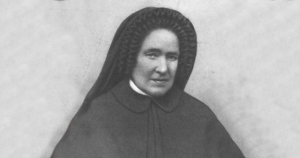
Saturnina Jassá y Fontcuberta was born in Spain on March 3, 1851 in Calaceite, an Aragonese municipality then belonging to the diocese of Tortosa in the province of Teruel. After a normal childhood and youth, Saturnina, a very religious girl, in 1874, at twenty-three, entered the Archconfraternity of Santa Teresa where she met Father Enrico de Ossó y Cervelló. Three years later, on May 4, 1877, she entered the "Company of St. Teresa of Jesus", a religious congregation founded by Father Enrique.
In the same year she was sent to represent her congregation on the Teresian pilgrimage to Avila and Alba de Tormes. She obtained the title of elementary teacher and in the following year that of high school teacher. On January the 1st, 1879, she pronounced her religious vows in the hands of the founder and took the name of Saturnina of the Agonizing Heart of Jesus. On the 12th of October 1879, she was appointed Superior and Mistress of Novices in the Tortosa community. After all the religious of the congregation made their perpetual profession, Sister Saturnina was elected Superior General of the congregation. After her seven years as superior, in 1889 she was assigned to Mexico to found the various houses of the congregation and where she was a teacher in Puebla and in 1893 Superior in Chilapa. Moreover, in Mexico, for three years she was entrusted with the direction of the nascent congregation of the Religious of the Cross of the Sacred Heart..
In the new congregation she had the opportunity to witness to her great gifts and virtues through immense sacrifices. In 1900 she returned to the Company of Santa Teresa and was immediately appointed Superior of the Valencia house. In 1904 she became Provincial in charge of the Sacred Heart Province and in 1906 Superior of Ciudad Rodrigo community. Re-elected Superior General in 1908, she remained in that role for twelve years, proving to be a nun with a strong personality, who knew how to guide the Institute in absolute fidelity to the intentions of the founder. In 1920, she was appointed General Councillor of the Congregation, in that year she retired to the novitiate of Jesus (Tortosa).
She died in the odour of sanctity on October 13, 1936, in Tortosa.
The decree of heroic virtues was promulgated on March 3, 1990, and she was declared Venerable.
Procedure - Saturnina del Cuore Agonizzante di Gesù
1. The canonical norms concerning the procedure to be followed in the Causes of Saints are stated in the Apostolic Constitution Divinus Perfectionis Magister promulgated by John Paul II on 25 January 1983 (AAS LXXV, 1983, 349-355).
2. To initiate a Cause it is necessary that at least five years pass after the death of the candidate. This is to allow for greater balance and objectivity in the evaluation of the case and to allow the emotions of the moment to decant. There must be a clear conviction among people about his/her sanctity (fama sanctitas) and about the efficacy of his/her intercession with the Lord (fama signorum).
Documentation [Saturnina del Cuore Agonizzante di Gesù]
PLEASE NOTE
1) In order to be able to consult the Positio please fill in the request form on this page.
2) If your request is accepted, we will then send you the conditions and directions for consulting the document.
Links - Saturnina del Cuore Agonizzante di Gesù
Documentation [Immacolato Giuseppe di Gesù]
PLEASE NOTE
1) In order to be able to consult the Positio please fill in the request form on this page.
2) If your request is accepted, we will then send you the conditions and directions for consulting the document.
[No form id or name provided!]
Links - Immacolato Giuseppe di Gesù
Procedure - Immacolato Giuseppe di Gesù
1. The canonical norms concerning the procedure to be followed in the Causes of Saints are stated in the Apostolic Constitution Divinus Perfectionis Magister promulgated by John Paul II on 25 January 1983 (AAS LXXV, 1983, 349-355).
2. To initiate a Cause it is necessary that at least five years pass after the death of the candidate. This is to allow for greater balance and objectivity in the evaluation of the case and to allow the emotions of the moment to decant. There must be a clear conviction among people about his/her sanctity (fama sanctitas) and about the efficacy of his/her intercession with the Lord (fama signorum).
Immacolato Giuseppe di Gesù
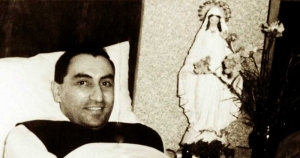
The Venerable Servant of God Immaculato Joseph of Jesus (Aldo Brienza) was born on August 15, 1922, in Campobasso (Italy). At the age of sixteen, while attending the Higher Technical Institute, he began to feel intense pain accompanied by very high fever. He was diagnosed with osteomyelitis which began deforming his limbs, forcing him to remain bedridden until death.
On March 25, 1943, he entered the Secular Order of Carmel, offering himself as a victim for the sanctification of priests. Since his feeling of having a Carmelite vocation was so strong, the Holy See, on March the 2nd, 1948, granted him the special privilege of making solemn profession of religious vows in the Discalced Carmelite Order, which took place on May 11, 1948.
Living with his family, he constantly received visits from fellow Secular Carmelites and the faithful, many of whom sought spiritual advice. He lived an extraordinary apostolate, carried out entirely from bed, in prayer and in the constant offering of sufferings to the Lord. In addition, he maintained correspondence with many brothers and sisters of the Carmelite Order. To everyone he repeated his spiritual motto: «Working is good, praying even better, but suffering in union with Jesus is everything».
He died in Campobasso (Italy) on April 13, 1989, at the age of 67.
The Venerable Servant of God carried out an intense apostolate from the bed of his house. Not being in a position to move, he received people in need of guidance in their spiritual journey. His teachings were very solid. His strength was prayer. As a good Carmelite, he made prayer the strong point of his life. His is a Eucharistic and Marian spirituality, also accompanied by what he had learnt from the experience of the saints, especially the Carmelite saints.
He experienced the phases of aridity described by St. John of the Cross, always maintaining his abandonment to God.
He was a person of hope because he entrusted himself to the Lord in every circumstance, especially in the most arduous trials. He lived his illness always trusting in God, striving towards eternal life with determination.
He loved God and neighbour above all other realities and, with the impression that he was not trying hard enough, he tried to improve himself tirelessly.
The offering of his pain to God on behalf of his brethren represented the central element of his charity towards his neighbour. He offered himself as a victim for priests and for those in every kind of need, realizing his self-giving in an ever increasingly full way. He supported the missions of the Church and Carmel with money received from the family, revealing a splendid passion for the apostolic activities of the Christian community.
The decree proclaiming his heroic virtues was promulgated on the 18th of February, 2022.
Last News

Servant of God Maria Angelica of the Eucharist
June 25, 2026

Venerable Jean-Thierry of the Child Jesus and the …
June 17, 2026

Venerable Maria Eletta di Gesù
June 17, 2026

Venerable Maria Teresa of the Most Holy Trinity (Y…
June 17, 2026

Blessed Anna of Saint Bartholomew
June 10, 2026

Martyrs of Santander
May 27, 2026