


Teresa del Cuore Immacolato di Maria (Guasch y Toda)
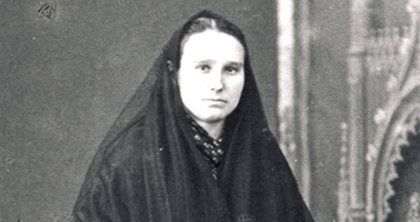
Teresa Toda y Guasch was born in Riudecanyes (Spain) on May 28, 1848 and was baptized the next day in the parish of her hometown.
On July 8, Antonio Guasch, her father, who had already left home, violently snatched his daughter Teresita from his wife's arms and fled with her, endangering the child's life. The girl was rescued by her maternal grandmother, Magdalena, helped by other men in the city.
On August 8, 1848, Teresa Toda presented herself to the Archbishop of Tarragona, to receive the Sacrament of Confirmation. From the end of that year Teresita began to live in Tarragona, with her mother, grandmother and uncles. In 1853, she was enrolled in the College of the Company of Mary. Her mother wanted an attentive education for her daughter, especially a formation well founded on Christian principles and values, and which she tried to inculcate in the family.
God was preparing the way for mother and daughter to become a ground ready to receive the calling that was reserved for them.
In 1863, her mother confided to Teresa her desire to consecrate herself to God, founding a religious institute for the reception and education of orphaned girls. Teresa Guasch, who had thought of joining another Congregation, fully accepted her mother's plan.
From this moment Teresa Toda and Teresa Guasch, mother and daughter, in perfect union and harmony, had only one goal: to consecrate their lives to God and to found a Congregation preferably at the service of orphans.
Recommended by Dr. Caixal, Canon of the cathedral of Tarragona and spiritual director of the mother, they prepared and organized everything in silence, overcoming many difficulties and without ever losing their unshakable faith in God.
In 1883, the first Constitutions of the Congregation of the Teresian Carmelite Sisters of St Joseph were adopted by the Vicar Capitular of the Bishopric of Barcelona. Together with her mother and two other companions, Catherine Pera, Rosa Maria Valles y Capdevila, Teresa Guasch made her religious profession, taking the name Teresa of the Immaculate Heart of Mary.
Teresa Guasch embodied her mother's ideal better than anyone else; she became the inspiration, pedagogue and soul of the Congregation. First in her mother's life, and then as a follower of her work.
In 1898, after the death of her mother, she was elected Superior General of the Congregation, a position she held until her death. In 1902 she obtained the definitive diocesan approval and in 1911 the decree of praise and the definitive approval of the Institute.
Other foundations followed: 1902, Sabadell, 1906, Roda de Bará and 1916 Tarragona.
In 1912 she suffered a serious illness that she was determined would not be an obstacle to continue, with perseverance and perseverance in the face of her work. But the disease undermined her body and she, who had always worked tirelessly, multiplied her activity in the last days because she already felt the end was near.
On December 15, Saturday, between 11 and 12 o'clock in the evening, she gave her soul to God.
The decree on her heroic virtues was promulgated on April 19, 2004.
Procedure - Teresa del Cuore Immacolato di Maria (Guasch y Toda)
1. The canonical norms concerning the procedure to be followed in the Causes of Saints are stated in the Apostolic Constitution Divinus Perfectionis Magister promulgated by John Paul II on 25 January 1983 (AAS LXXV, 1983, 349-355).
2. To initiate a Cause it is necessary that at least five years pass after the death of the candidate. This is to allow for greater balance and objectivity in the evaluation of the case and to allow the emotions of the moment to decant. There must be a clear conviction among people about his/her sanctity (fama sanctitas) and about the efficacy of his/her intercession with the Lord (fama signorum).
Documentation [Teresa del Cuore Immacolato di Maria - Guasch y Toda]
PLEASE NOTE
1) In order to be able to consult the Positio please fill in the request form on this page.
2) If your request is accepted, we will then send you the conditions and directions for consulting the document.
Links - Teresa del Cuore Immacolato di Maria (Guasch y Toda)

Teresa di San Giuseppe (Toda y Juncosa)
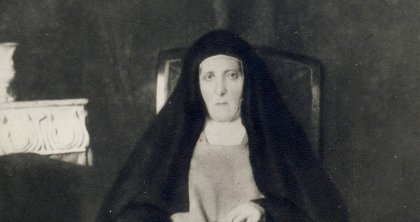
Teresa Toda y Juncosa was born in Riudecanyes, Tarragona (Spain) on August 19, 1826. When she was only 13 years old, her father died. Like the girls of her time, in her youth Teresa did not attend school, nor did she undertake particular studies.
A pious young woman of wealthy position, she married Antonio Guasch in 1847. This relationship lasted only three months; in fact, mistreated by her husband, she returned to her mother Magdalena’s house, where on May 28, 1848 her only daughter, Teresita, was born, whose life had been threatened in her mother's womb by her father.
On 5th of August 1848, she was granted a marriage separation by the ecclesiastical court of Tarragona. She left her hometown for Tarragona. Here she carefully took care of the education of her daughter and at the same time she prepared to found, in 1878, supported by Canon D. José Caixal, the Congregation of the Teresian Carmelite Sisters of St. Joseph by which, with her daughter, she would pursue her desire to welcome and educate poor orphan girls.
Together with her daughter Teresa Guasch and two other companions, she made her solemn profession on September 16, 1883, taking the religious name of Teresa of St Joseph. That same day she was elected the first Superior General; they wrote the first Constitutions and opened the first colleges.
She died on July 30, 1898 in Barcelona, after having spent her whole life in the service of Love.
The decree on her heroic virtues was promulgated on June 3, 2013.
Procedure - Teresa di San Giuseppe (Toda y Juncosa)
1. The canonical norms concerning the procedure to be followed in the Causes of Saints are stated in the Apostolic Constitution Divinus Perfectionis Magister promulgated by John Paul II on 25 January 1983 (AAS LXXV, 1983, 349-355).
2. To initiate a Cause it is necessary that at least five years pass after the death of the candidate. This is to allow for greater balance and objectivity in the evaluation of the case and to allow the emotions of the moment to decant. There must be a clear conviction among people about his/her sanctity (fama sanctitas) and about the efficacy of his/her intercession with the Lord (fama signorum).
Documentation [Teresa di San Giuseppe - Toda y Juncosa]
PLEASE NOTE
1) In order to be able to consult the Positio please fill in the request form on this page.
2) If your request is accepted, we will then send you the conditions and directions for consulting the document.
[No form id or name provided!]
Links - Teresa di San Giuseppe (Toda y Juncosa)
Teresa di Gesù Bambino di Praga
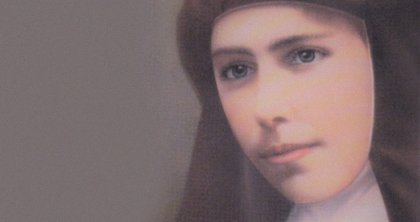
Teresa Mira García was born in Algueña, Alicante - Spain on September 26, 1895. Daughter of José and Teresa, she was the second of nine children.
To receive Jesus in her First Communion she established a relationship of friendship and brotherhood that she had always cultivated with simplicity and joy. A good viaticum for her courageous and determined choice to follow Christ in the consecrated life. She chose to enter the Teresian Carmelite Missionary Sisters.
She deeply embodied the charism of the congregation that emanated from the mystery of the Church and consecrated herself to God for the service of others.
The evangelizing dimension lived in a climate of ecclesial experience, as a daughter of Blessed Francesco Palau, her mission was a generous dedication to the members of the Mystical Body of Christ and to make them sharers in her own communion of life.
Teresa lived entirely as a missionary in the Teresian Carmel from 1915 until her death on February 26, 1941.
On December 17, 1996, the decree on her heroic virtues was promulgated.
Documentation [Teresa di Gesù Bambino di Praga]
PLEASE NOTE
1) In order to be able to consult the Positio please fill in the request form on this page.
2) If your request is accepted, we will then send you the conditions and directions for consulting the document.
[No form id or name provided!]
Last News

Servant of God Maria Angelica of the Eucharist
June 25, 2026

Venerable Jean-Thierry of the Child Jesus and the …
June 17, 2026

Venerable Maria Eletta di Gesù
June 17, 2026

Venerable Maria Teresa of the Most Holy Trinity (Y…
June 17, 2026

Blessed Anna of Saint Bartholomew
June 10, 2026

Martyrs of Santander
May 27, 2026