


Procedure - Rufino della Vergine del Carmelo
1. The canonical norms concerning the procedure to be followed in the Causes of Saints are stated in the Apostolic Constitution Divinus Perfectionis Magister promulgated by John Paul II on 25 January 1983 (AAS LXXV, 1983, 349-355).
2. To initiate a Cause it is necessary that at least five years pass after the death of the candidate. This is to allow for greater balance and objectivity in the evaluation of the case and to allow the emotions of the moment to decant. There must be a clear conviction among people about his/her sanctity (fama sanctitas) and about the efficacy of his/her intercession with the Lord (fama signorum).
Links - Rufino della Vergine del Carmelo

Documentation [Rufino della Vergine del Carmelo]
PLEASE NOTE
1) In order to be able to consult the Positio please fill in the request form on this page.
2) If your request is accepted, we will then send you the conditions and directions for consulting the document.
Rufino della Vergine del Carmelo
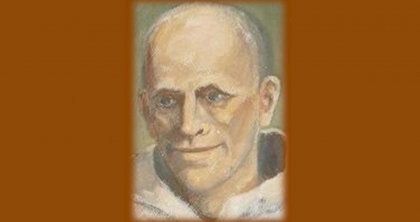
Rufino was born in Villaveta Zazpe Zabalza (Navarre), Spain, on November 16, 1891.
Fleeing the wars of his time, he emigrated to Chile in 1913.
In the same year he joined the Discalced Carmelites of Santiago, made his religious vows on May 16, 1915 with the name of Rufino of the Virgin of Carmel. In 1920 he was assigned to Vina del Mar. He put himself totally at the service of others. He was a simple man, with barely a tentative smile, a pat on the back, charitable.
He died on May 20, 1977.
Procedure - Rodolfo della Trasverberazione del Cuore di Teresa
1. The canonical norms concerning the procedure to be followed in the Causes of Saints are stated in the Apostolic Constitution Divinus Perfectionis Magister promulgated by John Paul II on 25 January 1983 (AAS LXXV, 1983, 349-355).
2. To initiate a Cause it is necessary that at least five years pass after the death of the candidate. This is to allow for greater balance and objectivity in the evaluation of the case and to allow the emotions of the moment to decant. There must be a clear conviction among people about his/her sanctity (fama sanctitas) and about the efficacy of his/her intercession with the Lord (fama signorum).
Links - Rodolfo della Trasverberazione del Cuore di Teresa
Documentation [Rodolfo della Trasverberazione del Cuore di Teresa]
PLEASE NOTE
1) In order to be able to consult the Positio please fill in the request form on this page.
2) If your request is accepted, we will then send you the conditions and directions for consulting the document.
[No form id or name provided!]
Rodolfo della Trasverberazione del Cuore di Teresa
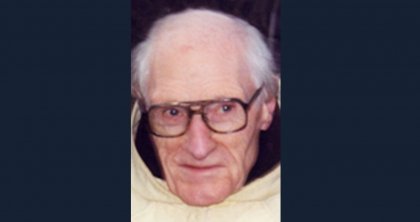
Rudolf of the Transverberation was born on November 14, 1919 in Bachowice, (Poland) not far from Wadowice, in the archdiocese of Krakow, into a practicing and farming family.
He completed his middle-classical studies in the grammar school of the Discalced Carmelites in Wadowice, after which he was welcomed into the novitiate of the Order in Czerna near Krakow, where on August 28, 1935 he received from the hands of the prior, Blessed Alfonsus Mary Mazurek, the Carmelite habit. He studied in Wadowice and Krakow. Having made his solemn profession in Krakow on 21st of November 1940, he was ordained priest in Czerna on 24th of June 1944.
For many years of his religious life, he worked in the formation of novices and students as a teacher, educating entire generations of Polish Discalced Carmelite religious. He was also spiritual director of numerous people, lay and consecrated, as well as diocesan priests. The esteem in which the religious held him is also documented by the fact that three times they chose him as a Provincial Definitor.
In the last years of his life, he stayed in the Wadowice monastery as spiritual father of the boys of the College and as a highly esteemed chaplain of the sick in the city hospital. Struck by the incurable disease of cancer, he heroically endured suffering, and a few hours before his death, he received in the hospital the welcome visit of Fr. Camillo Maccise, Superior General of the Order, who was carrying out a pastoral visit of the Province of Krakow. The blessing received by Father General was his last pact in the Order of his total self-giving to Christ and to his neighbour, for the good of the Church.
He died on February 27, 1999.
The Diocesan Inquiry into his «Life, Virtue and Reputation for Holiness» was held from 11th of January 2011 to 11th of June 2017 at the Krakow Archdiocese. On 18th of May 2018 the decree of validity was granted.
Procedure - Raffaele Carlo Rossi (cardinale)
1. The canonical norms concerning the procedure to be followed in the Causes of Saints are stated in the Apostolic Constitution Divinus Perfectionis Magister promulgated by John Paul II on 25 January 1983 (AAS LXXV, 1983, 349-355).
2. To initiate a Cause it is necessary that at least five years pass after the death of the candidate. This is to allow for greater balance and objectivity in the evaluation of the case and to allow the emotions of the moment to decant. There must be a clear conviction among people about his/her sanctity (fama sanctitas) and about the efficacy of his/her intercession with the Lord (fama signorum).
Links - Raffaele Carlo Rossi (cardinale)

Last News

Servant of God Maria Angelica of the Eucharist
June 25, 2026

Venerable Jean-Thierry of the Child Jesus and the …
June 17, 2026

Venerable Maria Eletta di Gesù
June 17, 2026

Venerable Maria Teresa of the Most Holy Trinity (Y…
June 17, 2026

Blessed Anna of Saint Bartholomew
June 10, 2026

Martyrs of Santander
May 27, 2026