


Procedure - Maria Isabella dell’Amore Misericordioso
1. The canonical norms concerning the procedure to be followed in the Causes of Saints are stated in the Apostolic Constitution Divinus Perfectionis Magister promulgated by John Paul II on 25 January 1983 (AAS LXXV, 1983, 349-355).
2. To initiate a Cause it is necessary that at least five years pass after the death of the candidate. This is to allow for greater balance and objectivity in the evaluation of the case and to allow the emotions of the moment to decant. There must be a clear conviction among people about his/her sanctity (fama sanctitas) and about the efficacy of his/her intercession with the Lord (fama signorum).
Links - Maria Isabella dell’Amore Misericordioso


Documentation [Maria Isabella dell’Amore Misericordioso]
![Documentation [Maria Isabella dell’Amore Misericordioso]](/media/k2/items/cache/ffc9a76e4f88b66c863df72bab4ef694_Generic.jpg)
PLEASE NOTE
1) In order to be able to consult the Positio please fill in the request form on this page.
2) If your request is accepted, we will then send you the conditions and directions for consulting the document.
Maria Isabella dell’Amore Misericordioso
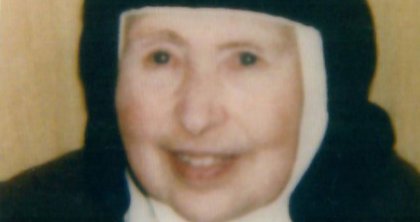
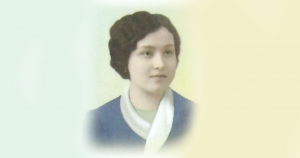
María Isabel Zapata de Calatayud was born in Gandía (Valencia), Spain, on December 27, 1907. She lost her mother at the age of three and her father two years later. The Christian formation received from her parents and then cultivated by the guardians to whom she was entrusted, made her a young woman of strong faith and profound values.
In the midst of a marriage project in which she was eager to participate, she was strongly driven by Jesus' call to the Teresian Carmel, entering the monastery of Manises (Valencia) in 1928 and receiving the name Mary Isabel of Merciful Love. In 1956 she took part in the foundation of the Carmel of Olla de Altea, where she carried out various duties serving the community.
Returning to her civil name and receiving the documents from the Vatican II Council with a spirit of joy, she soon had in her heart the desire to found another monastery and in 1973 she moved with a group of nuns to Orito, where she would spend the rest of her life. In 1987 she began to feel that her health was deteriorating and was hospitalized. On her sick bed she was visited by many people and one day a priest asked her: "Mother, tell us something about paradise. What is paradise?” She took a moment to reflect and replied, "Heaven is the centre of love. Heaven is the place where you always love".
Finally, on the morning of October 31, 1987, Mother Mary Isabel of Merciful Love died, at the time the conventual Mass was being celebrated, approximately during the recitation of the Lord's Prayer.
The Diocesan Inquiry into her "life, virtue and reputation for holiness" was opened on July the 1st, 2006 and closed on June 19, 2011 at the Orihuela-Alicante diocese.
Procedure - Maria Immacolata della SS. Trinità (Mãezinha)
1. The canonical norms concerning the procedure to be followed in the Causes of Saints are stated in the Apostolic Constitution Divinus Perfectionis Magister promulgated by John Paul II on 25 January 1983 (AAS LXXV, 1983, 349-355).
2. To initiate a Cause it is necessary that at least five years pass after the death of the candidate. This is to allow for greater balance and objectivity in the evaluation of the case and to allow the emotions of the moment to decant. There must be a clear conviction among people about his/her sanctity (fama sanctitas) and about the efficacy of his/her intercession with the Lord (fama signorum).
Links - Maria Immacolata della SS. Trinità (Mãezinha)
Documentation [Maria Immacolata della SS. Trinità (Mãezinha)]
![Documentation [Maria Immacolata della SS. Trinità (Mãezinha)]](/media/k2/items/cache/4eadae682909e5571fe2c1a4fc6acd34_Generic.jpg)
PLEASE NOTE
1) In order to be able to consult the Positio please fill in the request form on this page.
2) If your request is accepted, we will then send you the conditions and directions for consulting the document.
[No form id or name provided!]
Maria Immacolata della SS. Trinità (Mãezinha)
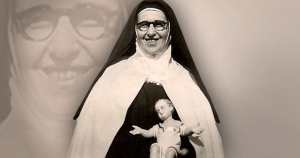
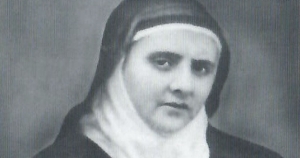
Maria Giselda Villela was born in 1909, in Maria da Fé, MG, Brazil. Fiery and restless, intelligent and stubborn, she wanted to mount a wild horse, which caused her to fall off onto the ground and, kicking her in the groin, caused her a wound that would degenerate into cancer. She availed herself of all the scarce resources of the medicine of the time, but her life would be, from now on, marked by the cross of illness.
She studied with the Sisters of Providence of Gap, in Itajubá, graduating in teaching. She taught in this College, and little by little, during this period, she matured her religious vocation. Her choice fell on Carmel. The young Giselda had discovered the mystery of the infinite love of God who wanted to dwell in the human heart. The Superior of the Carmel of Campinas had glimpsed in that young woman of worrying health a vigorous, strong and determined spirit. Shortly after her solemn profession, she was elected Sub-prioress and helped Carmel a lot, making available to God and the Sisters all her human and spiritual gifts.
At the age of only 34 she was chosen to go to Pouso Alegre, as Prioress, to found the Carmel of the Holy Family, with 3 other sisters. These gradually returned to the Carmel of Campinas, so much so that, in less than seven years after foundation, Mother Maria Imaculada found herself alone with a group of happy and inexperienced novices who, seeing their Prioress carrying out not only formation, but also cooking, poultry pen, assistance to the parlour and administration, gave her the nickname of "Mãezinha" (Mummy), shared not only by the sisters, but by the entire population of Pouso Alegre. She took care of each one and prayed. «Mummy» watched over every daughter that God had entrusted to her, and above all over the atmosphere of the Community. Her only request to God, on the day of the foundation, was that this nascent Carmel be a new home of Nazareth: that love reign there and, if not, that he put an end to this Carmel.
Wanting to spare the sisters, who were preparing to found a Carmel in Campos, RJ, she hid, as long as she could, the cancer that had silently progressed. Suffocating from difficulty in breathing, yet serene, she died on January 20, 1988.
Procedure - Maria Giuseppe di Gesù (Honorina)
1. The canonical norms concerning the procedure to be followed in the Causes of Saints are stated in the Apostolic Constitution Divinus Perfectionis Magister promulgated by John Paul II on 25 January 1983 (AAS LXXV, 1983, 349-355).
2. To initiate a Cause it is necessary that at least five years pass after the death of the candidate. This is to allow for greater balance and objectivity in the evaluation of the case and to allow the emotions of the moment to decant. There must be a clear conviction among people about his/her sanctity (fama sanctitas) and about the efficacy of his/her intercession with the Lord (fama signorum).
Links - Maria Giuseppe di Gesù (Honorina)
Last News

Servant of God Maria Angelica of the Eucharist
June 25, 2026

Venerable Jean-Thierry of the Child Jesus and the …
June 17, 2026

Venerable Maria Eletta di Gesù
June 17, 2026

Venerable Maria Teresa of the Most Holy Trinity (Y…
June 17, 2026

Blessed Anna of Saint Bartholomew
June 10, 2026

Martyrs of Santander
May 27, 2026